

Introduction to Informat AI Low-Code Platform
Introduction
Informat AI Low-Code Platform is an enterprise-level AI low-code development platform designed to help enterprises quickly build complex business systems. By providing rich functional modules and intuitive visual development tools, Informat AI Low-Code Platform significantly reduces development thresholds and time costs, enabling enterprises to flexibly and efficiently build and deploy various information management systems, such as ERP (Enterprise Resource Planning), MES (Manufacturing Execution System), OA (Office Automation), CRM (Customer Relationship Management), etc.
Informat adopts an open architecture, which can be easily integrated with mainstream collaborative office applications such as WeCom, DingTalk, Feishu, and can be flexibly connected to other enterprise internal systems (OA, ERP, master data, etc.) through API, scripts and other functions.
AI Capability Empowerment
- AI Agent
Supports full lifecycle operations such as query, add, edit, delete for data tables, allowing AI to automatically understand business models and gradually master enterprise knowledge. Without complex configuration, you can quickly build an exclusive intelligent agent and publish it as an MCP Server with one click, allowing external systems to easily call it through MCP Client, achieving stronger automation and business collaboration capabilities. - AI Create Applications and Data Tables
Quickly generate applications and data models through natural language, greatly improving modeling efficiency. - AI Script Intelligent Agent
Helps developers intelligently generate, check and optimize scripts, reducing development and maintenance costs. - AI Application Scenarios
Provides video examples of typical scenarios such as invoice recognition, PDF/Word document parsing, quick table creation, and intelligent script generation. - Complex Intelligent Agent
Based on MCP protocol, supports multi-agent collaboration, easily building complex business processes and intelligent application scenarios.
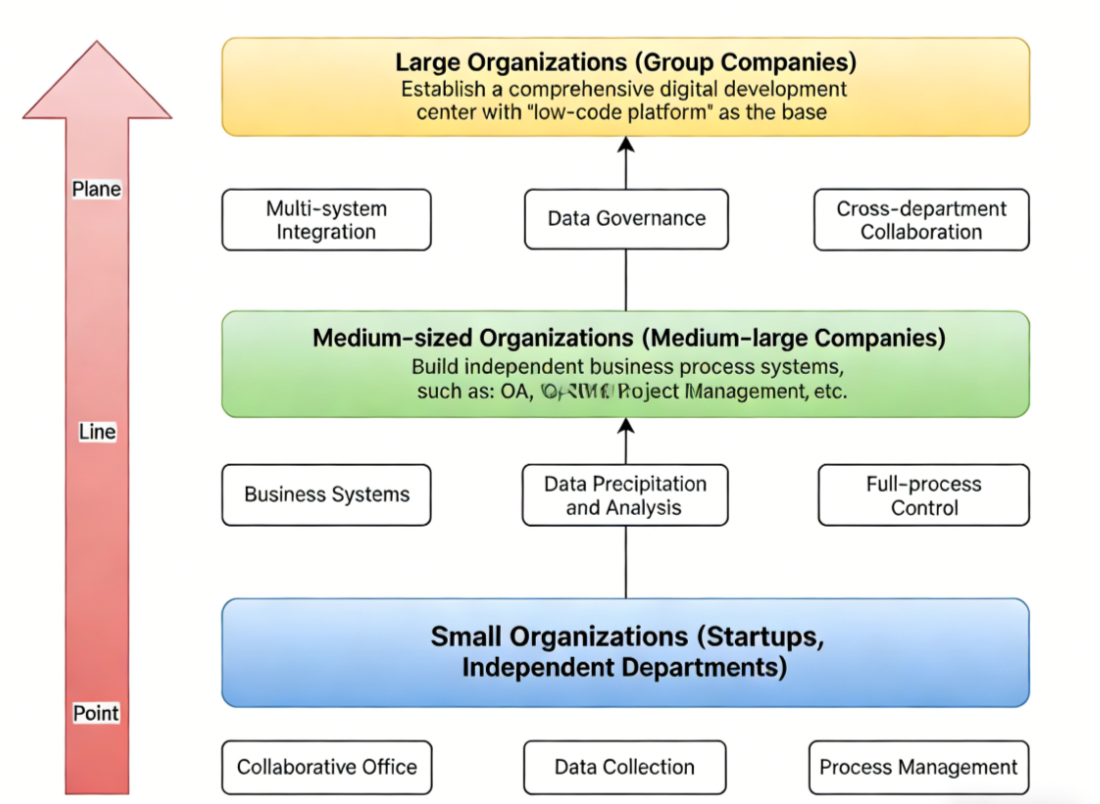
Using the powerful functional components provided by Informat, from small teams to large enterprises, they can quickly use Informat AI Low-Code Platform to build information systems suitable for their own businesses.
Core Functions
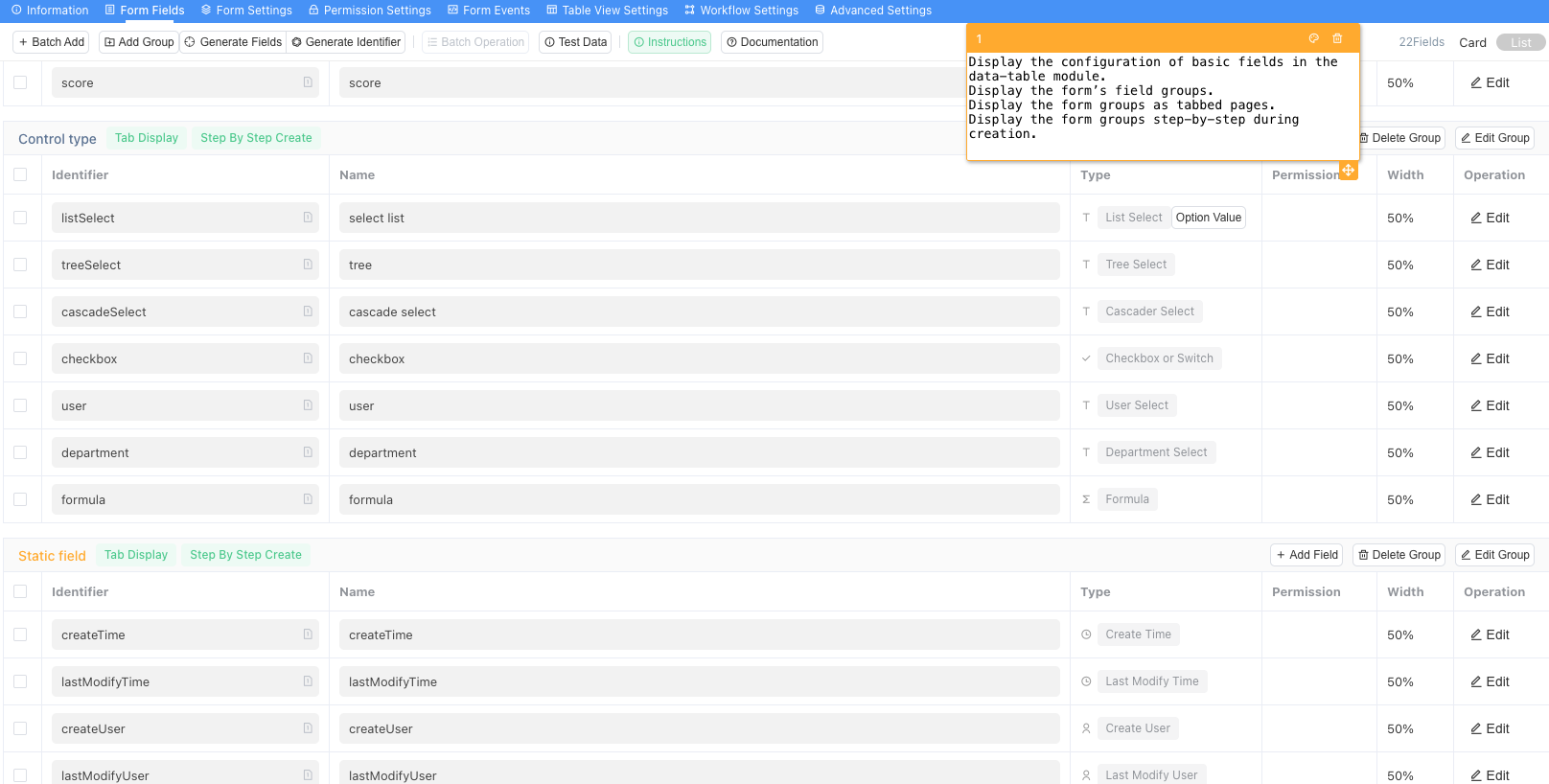
- Form Designer:
- Supports multiple field types, such as single-line text, list selection, date picker, etc.
- Provides advanced form logic, such as conditional display, data validation and dynamic calculation.
- Supports multi-level nesting and complex layouts to meet various business needs.
Data Tables:
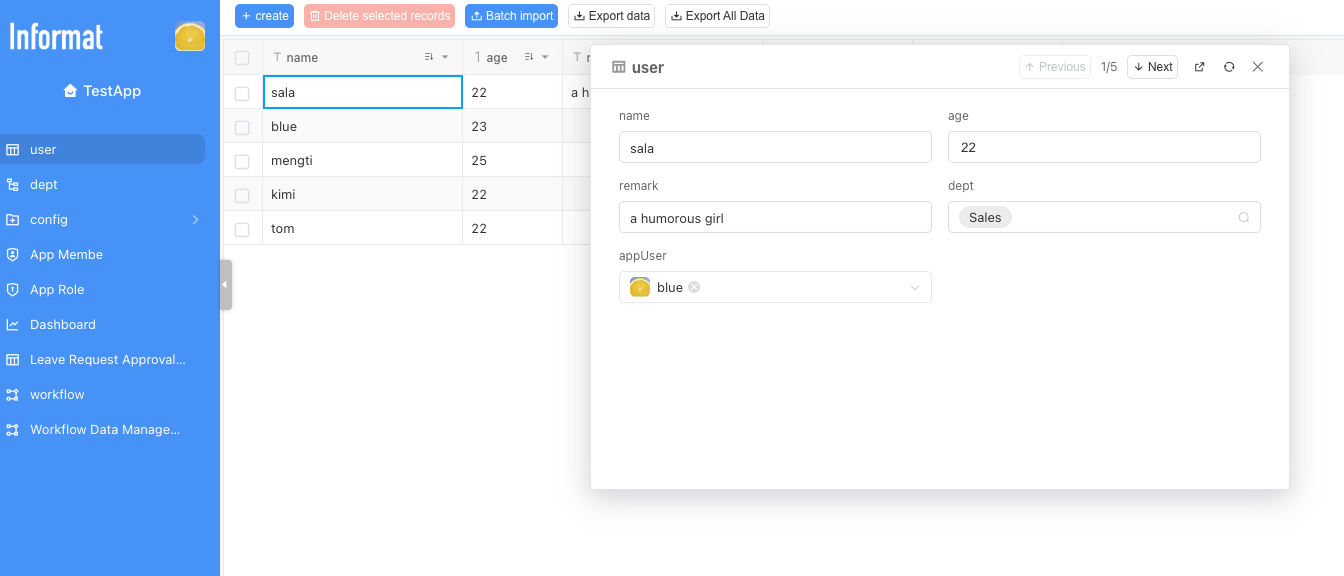
- Provides flexible table views, supporting data sorting, filtering and pagination.
- Supports custom columns and complex cell rendering.
- Provides batch operations and import/export functions to improve data management efficiency.
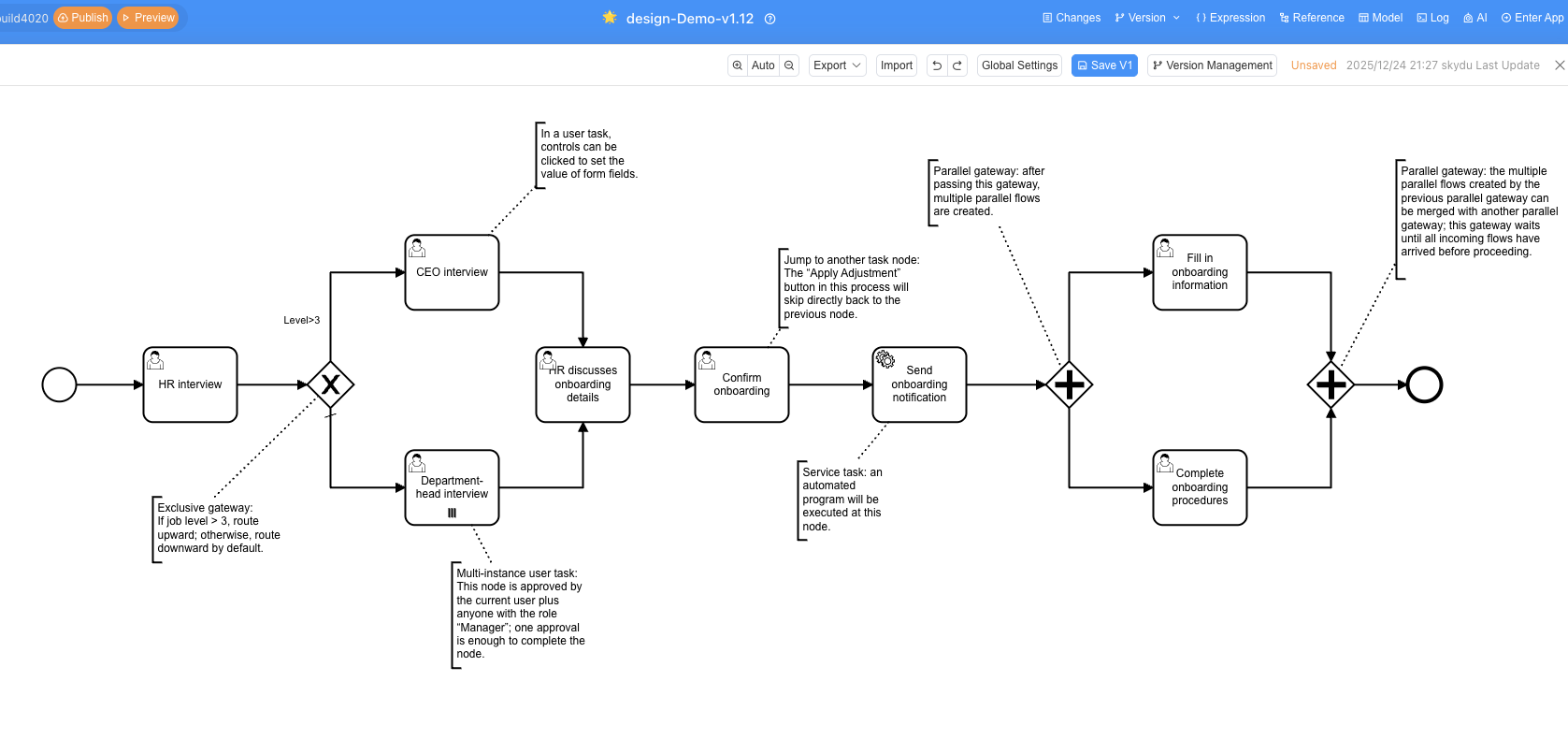
BPMN Process Designer:
- Based on BPMN 2.0 standard, supports design and management of complex business processes.
- Provides drag-and-drop process modeling tools to simplify process design.
- Supports process monitoring and optimization to ensure efficient operation of business processes.
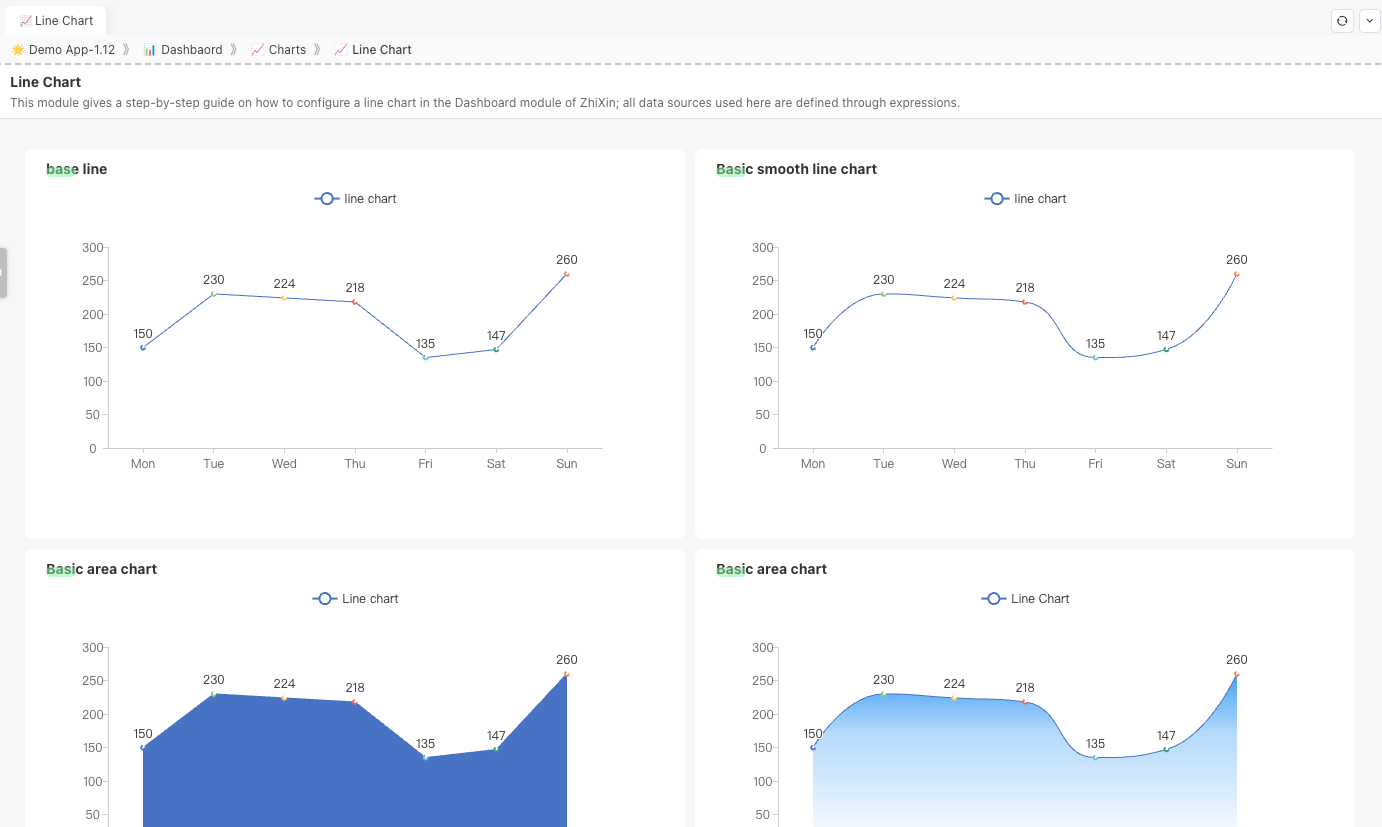
- Dashboard:
- Provides multiple visualization components, such as charts, indicator cards, maps, etc.
- Supports real-time data updates and interactive operations.
- Provides custom layouts and themes to meet personalized display needs.
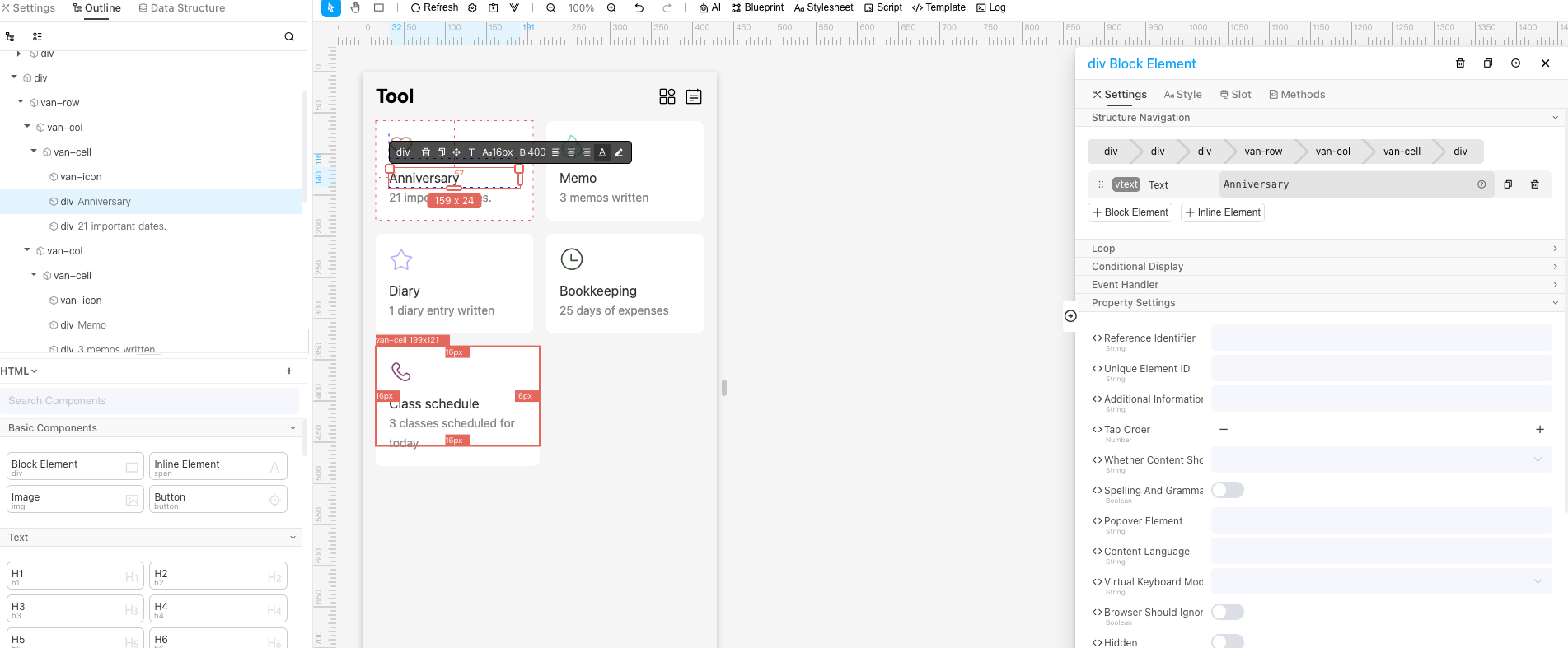
- Component Designer:
- Supports development and reuse of custom UI components.
- Provides a rich component library to meet various application scenarios.
- Supports dynamic configuration and event binding of components to improve development flexibility.
AI Assistant
- Integrates natural language processing and machine learning technologies to provide intelligent business suggestions.
- Supports automated operations and task scheduling to improve work efficiency.
- Provides data analysis and prediction functions to assist decision-making.
- Supports query, add, edit, delete of data tables, allowing AI to gradually understand business knowledge and quickly build intelligent agents.
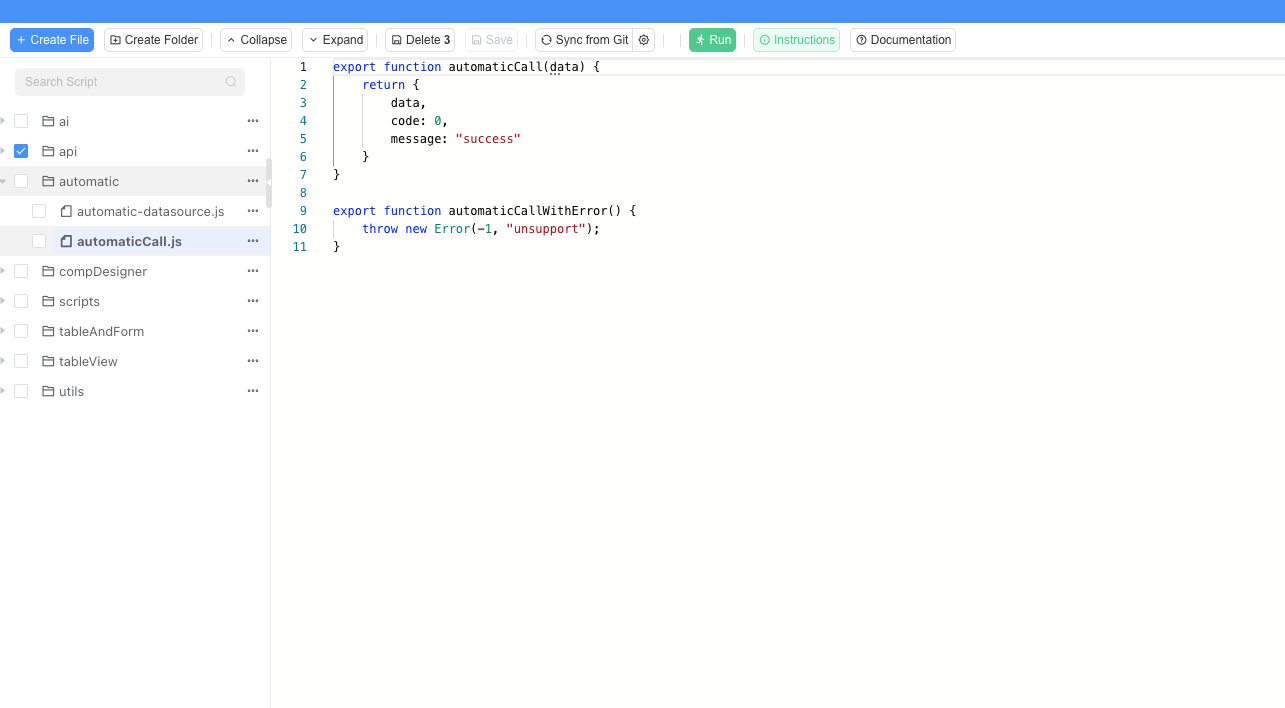
Script Support:
- Supports JavaScript script writing.
- Provides rich API interfaces for easy integration with other systems.
- Supports script debugging and version management to ensure code quality.
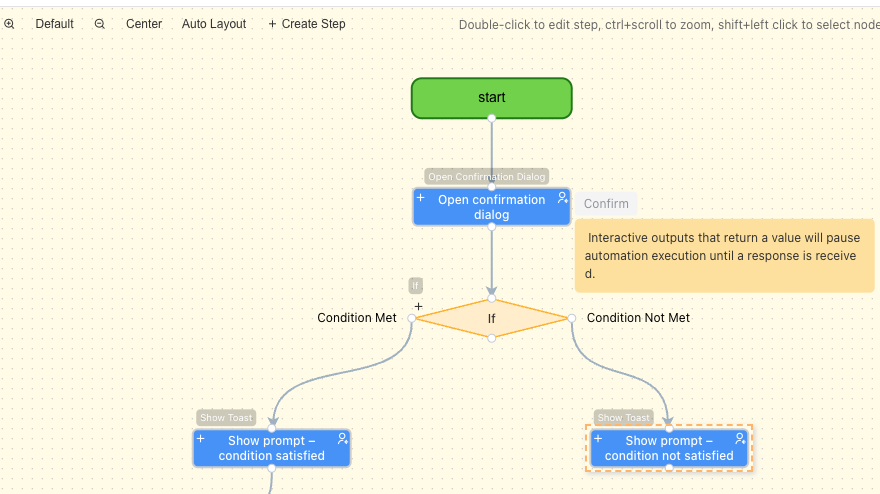
- Graphical Programming:
- Quickly implement business logic through drag-and-drop and configuration.
- Provides visual flowcharts and logic diagrams for easy understanding and maintenance.
- Supports seamless integration with other modules to improve development efficiency.
Platform Advantages
Efficient Development:
- Visual development tools and rich functional modules significantly reduce development time and costs.
- Supports rapid prototyping and iterative development to improve project delivery speed.
- Provides rich templates and examples to help users get started quickly.
Flexible Expansion:
- Supports custom components and plug-ins to meet personalized needs.
- Provides open API interfaces for easy integration with other systems and services.
- Supports multi-tenant and multi-language to meet global business needs.
Easy Maintenance:
- Intuitive interface and modular design facilitate system maintenance and upgrade.
- Provides detailed logs and monitoring functions to help quickly locate and solve problems.
- Supports automated testing and continuous integration to ensure system stability and high quality.
Enterprise-level Performance:
- After strict testing and optimization to ensure high performance and high availability of the system.
- Provides flexible deployment solutions, supporting cloud and local deployment.
- Provides complete security mechanisms to ensure data security and privacy.
Application Scenarios
Informat AI Low-Code Platform is widely used in the information construction of various enterprises, especially suitable for the following scenarios:
- ERP System:
- Integrate enterprise resources, optimize business processes, and improve operational efficiency.
- Support integration and management of modules such as finance, procurement, inventory, production, etc.
- Provide real-time data analysis and reports to assist decision-making.
MES System:
- Real-time monitoring and management of production processes, improving production efficiency and quality.
- Support production planning, work order management, quality control and other functions.
- Provide equipment networking and data collection to improve production transparency.
OA System:
- Simplify office processes and improve collaboration efficiency.
- Support email, calendar, task management and other functions.
- Provide mobile office and message push to improve office flexibility.
CRM System:
- Manage customer relationships and improve sales and service levels.
- Support customer information management, sales tracking, after-sales service and other functions.
- Provide customer data analysis and insights to improve customer satisfaction.