Cascader Selection
Description
| Item | Content |
|---|---|
| Control Class | Control Class |
| Sortable | Yes |
| Filterable | Yes |
| Supported Filter Types | Single Selection: Contains, Does Not Contain, Equal, Not Equal, Empty, Not Empty, In List, Not In List |
Settings
| Setting | Description |
|---|---|
| Allow empty | Set whether the field is required |
| Multiple selection | When enabled, the cascader selection will support multiple selection. Enabling multiple selection will change the field's storage type |
| Allow selection at any level | When enabled, supports selecting intermediate nodes |
| Placeholder in form when not filled | Text information displayed in the input box when no information is entered in the field |
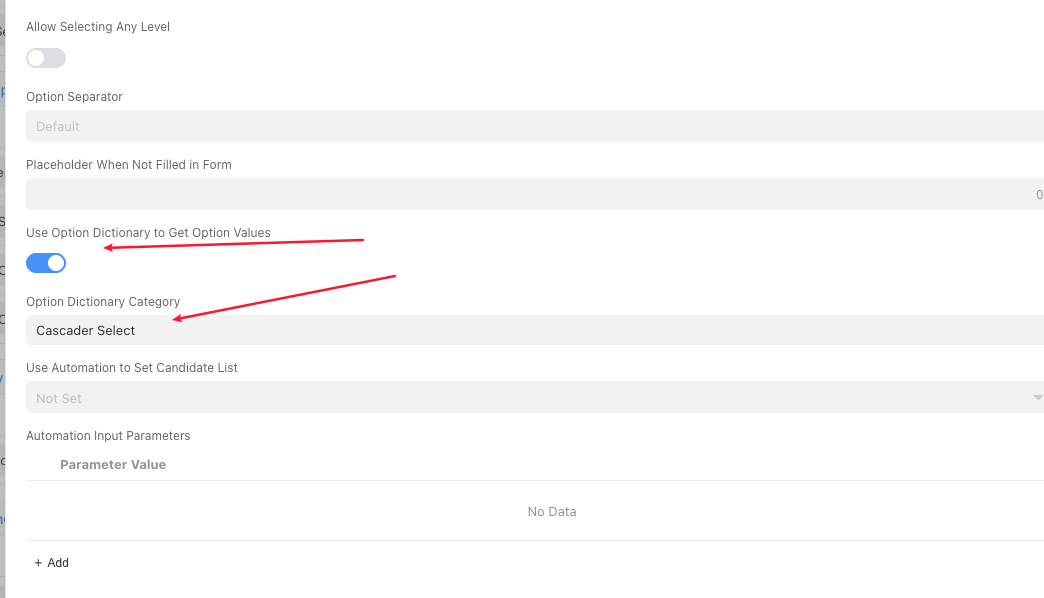
| Use option dictionary to get option values | Whether to use the data dictionary in application settings as options |
| Option dictionary category | When using the data dictionary in application settings as options, the data dictionary category used for list selection data |
| Option value type | Can use system preset option values Options: Default、Province、Province and City、Province, City and District |
| Option values | Can set the option values for this field. Only displayed when option value type is Default Supported operations: Add、Copy from other fields、Add sub-options、Delete option |
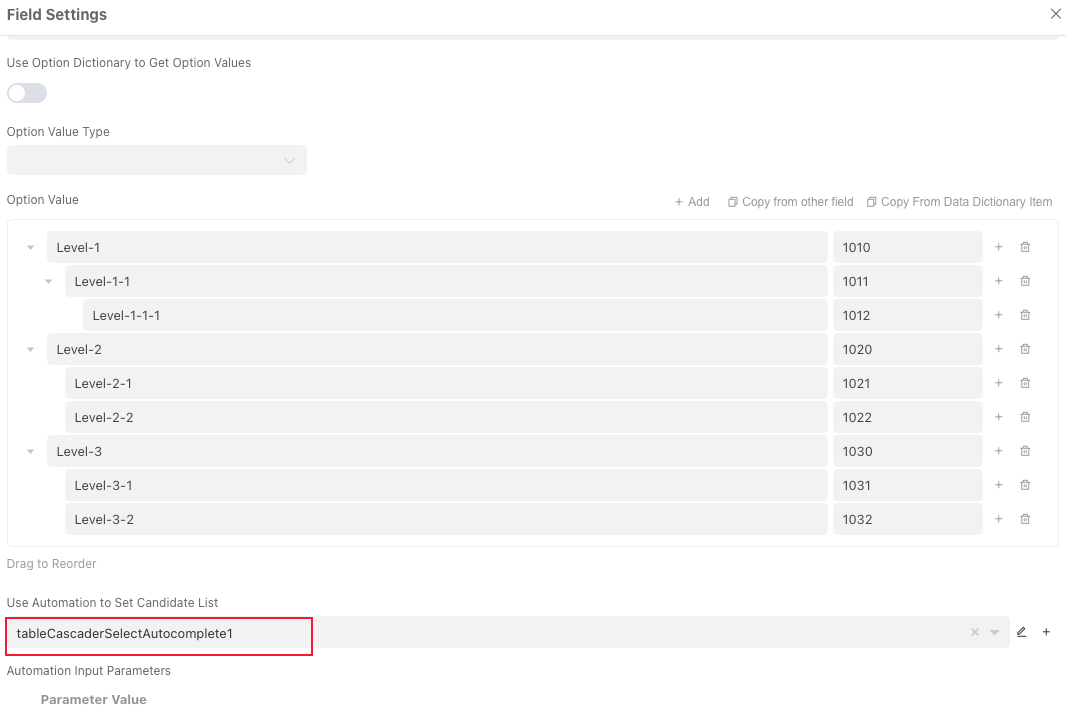
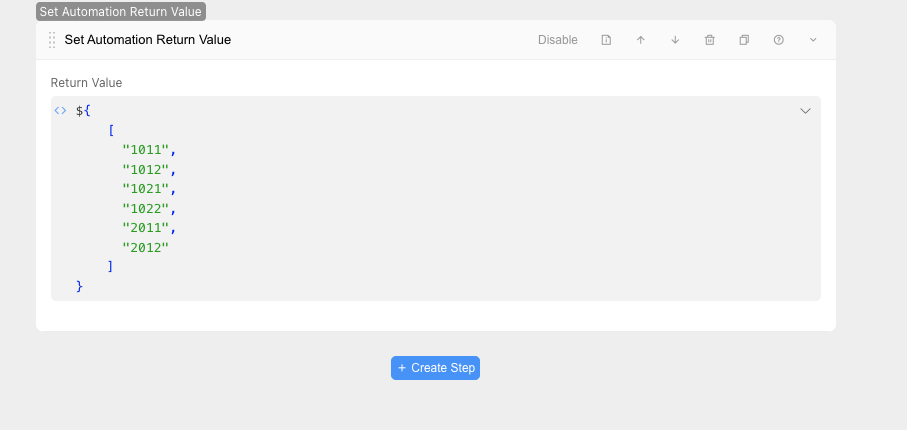
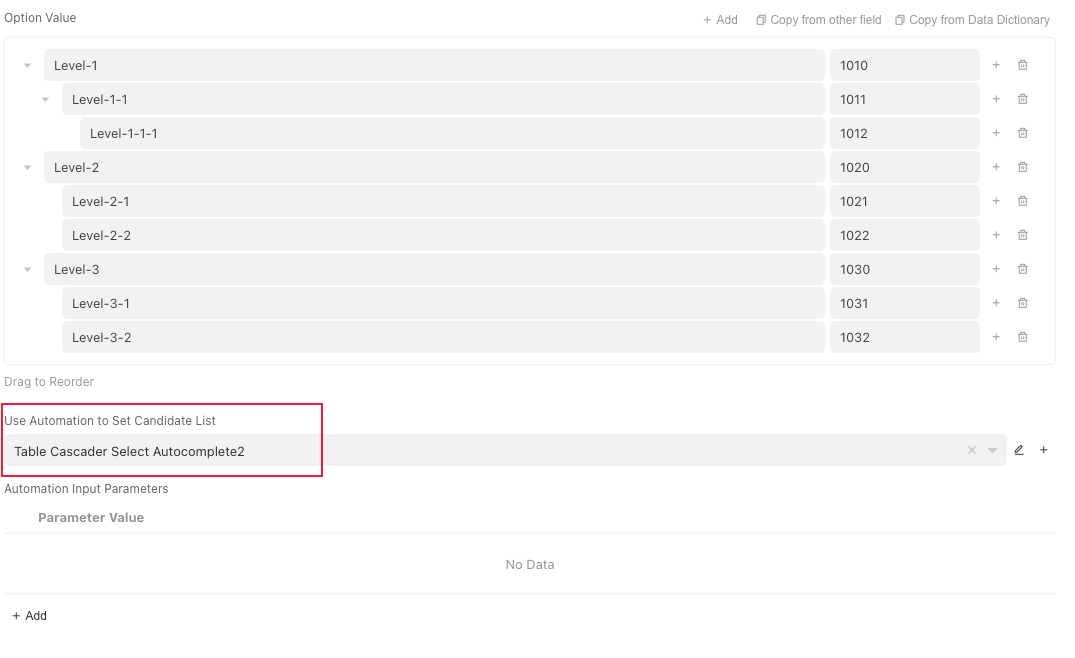
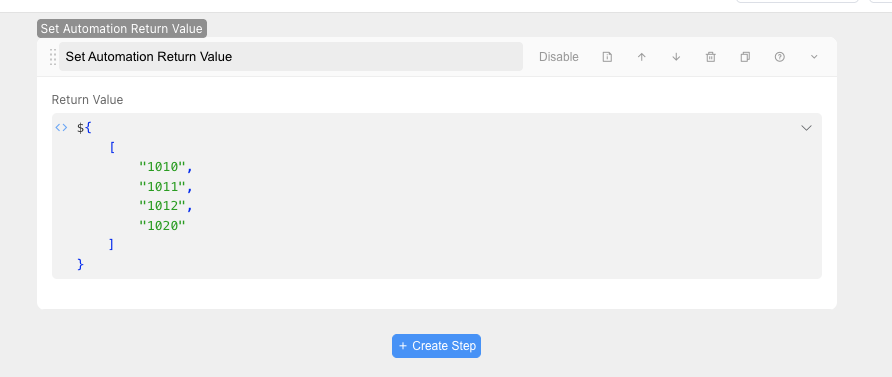
| Use automation to set candidate list | Support using automation to filter the set option values |
| Automation input parameters | Parameters passed to automation based on context when calling automation for candidate values |
Note
Single selection and multiple selection have different storage types. Enabling/disabling multiple selection may cause data loss, so please operate with caution. For conversion rules, refer to
When adding option values, a random code will be automatically generated as the option ID. You must modify the option ID according to the usage scenario to facilitate subsequent calls
Use automation to set candidate list:
- The automation return value only supports the ID list
Array<String>of option values. - The ID list returned by automation must be within the scope of the
Identifierin the option values or data dictionary. - When the ID list returned by automation is
null, all option values will be displayed.
- The automation return value only supports the ID list
Database Storage Format
| Selection Type | Field Type | Description | Example |
|---|---|---|---|
| Single Selection | text[] | Array | {Guangdong,Shenzhen,Nanshan} |
| Multiple Selection | jsonb | Store JSON data structure | [["Shanghai", "City of Shanghai", "Huangpu District"], ["Shanghai", "City of Shanghai", "Pudong District"]] |
Usage Examples
Basic Usage
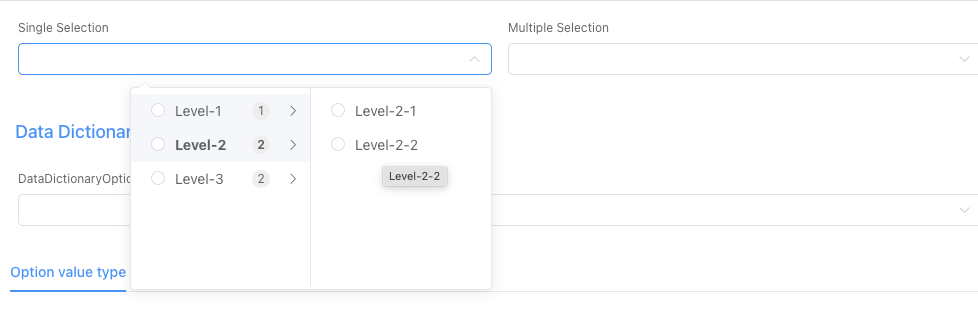
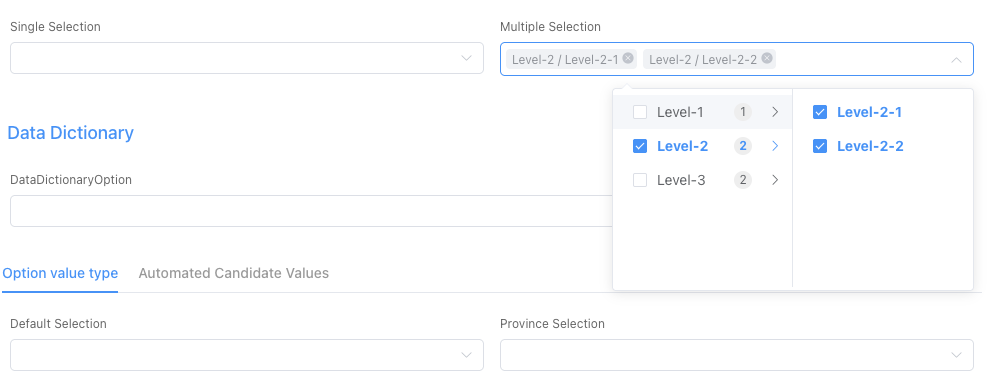
Use Option Dictionary to Get Option Values
For option value field configuration, refer to
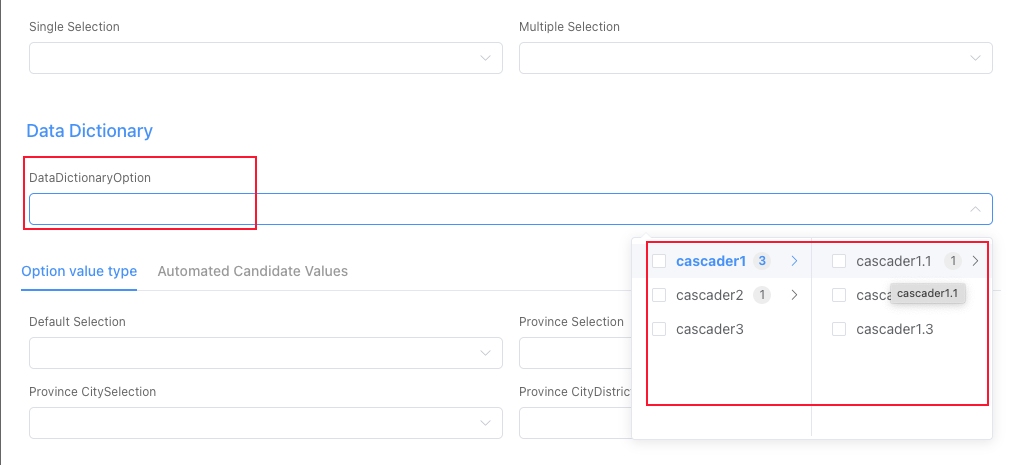
Option Value Type
The system has built-in Province, Province and City, Province, City and District data, which can be quickly configured to implement province-city-district selection.
Use Automation to Set Candidate List
Option definitions:
| Level | Option Value | Identifier |
|---|---|---|
| 0 | Hunan | 1010 |
| 1 | Changsha | 1011 |
| 1 | Cixi | 1012 |
| 0 | Hubei | 1020 |
| 1 | Wuhan | 1021 |
| 1 | Xiangyang | 1022 |
| 0 | Guangdong | 2010 |
| 1 | Guangzhou | 2011 |
| 1 | Shenzhen | 2012 |